Does clicking mean my joint is the source of pain?
Not necessarily. The guide lists clicking among reasons to seek an exam; muscles, joints, and movement need to be assessed together.
Let the muscles rest.
This is Dr. Shiven Gandhi’s complete, original 4-page guide, with all photographs, diagrams, and treatment details. For general education only; follow your provider’s individualized instructions. Results vary, and fees and timelines are confirmed during your visit.
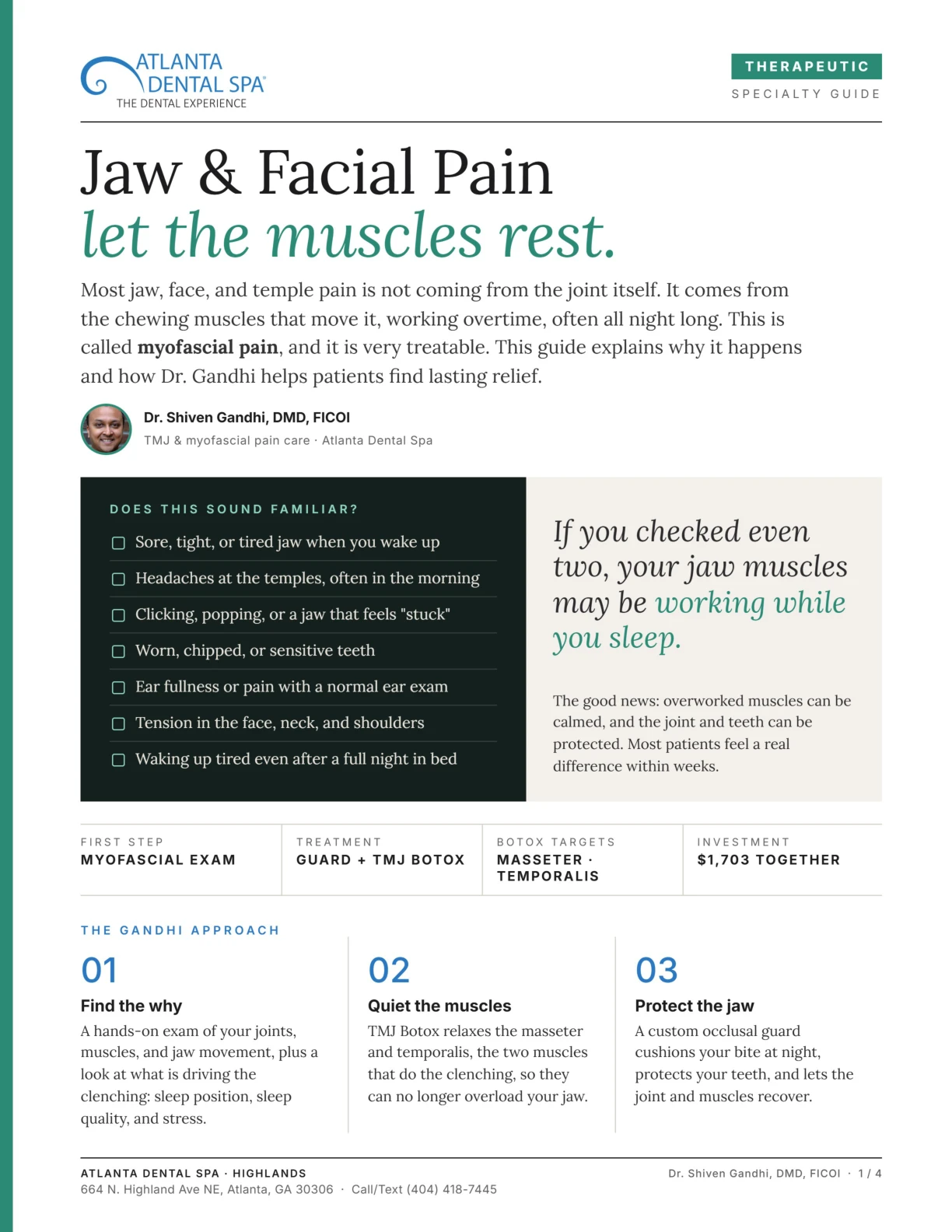
Understand jaw and facial pain, common clenching triggers, custom occlusal guards, therapeutic Botox, and the small habits that support your treatment at home.
Explore the illustrated guide above, switch to Text View for easier reading on a phone, or download your copy.
A tight jaw on waking, temple headaches, or worn teeth can point to chewing muscles working harder than they should. The guide focuses on myofascial pain: soreness and tender muscle areas associated with clenching or grinding, sometimes felt in the face, ears, or neck.
Jaw pain is not a diagnosis by itself. Dr. Gandhi begins by examining the joints, muscles, and jaw movement, then considers what may be driving the strain. Care, including a custom guard or off-label Botox for TMJ-related muscle pain where appropriate, is planned around those findings rather than assuming every symptom comes from the joint or needs the same treatment.
The myofascial exam looks at jaw movement and tenderness alongside symptoms such as morning soreness, clicking, or a stuck feeling. Sleep quality, sleep position, and stress are part of the conversation. The guide describes how repeated clenching can overload muscles and contribute to a cycle of pain and poor sleep.
Snoring or waking tired is worth mentioning. The guide identifies sleep-related airway disturbances as one possible clenching trigger and suggests discussing a sleep screening when these symptoms are present.
A custom occlusal guard is a precision-fit appliance worn during sleep. It spreads biting forces across the teeth and helps protect enamel and existing crowns or veneers from wear and chipping. Scans are taken for the guard, followed by a delivery visit to adjust the fit and review care.
A guard does not necessarily stop clenching. Its role is protection and support, so muscle symptoms and contributing habits still need attention.
Botox is one possible option for overworked masseter and temporalis muscles. The guide describes using it to reduce clenching force and associated soreness, alongside a guard where appropriate. It is not a guaranteed cure, does not repair the jaw joint, and does not replace evaluating the triggers.
Use for jaw muscle pain and clenching is off-label. Suitability is determined at the exam. The guide describes a gradual effect and a typical three-to-four-month duration, with repeat treatment considered according to individual response and need.
The guide encourages noticing daytime clenching, resting with lips together and teeth apart, avoiding gum chewing, and choosing softer foods during flares. It also discusses gentle warmth, supported yawning, relaxation, and reviewing sleep habits. Ask which measures fit your situation rather than treating a general checklist as a prescription.
Follow-up brings the pieces together: guard fit, symptoms, muscle response, and ongoing triggers. Your provider can adjust the plan as your needs change.
Not necessarily. The guide lists clicking among reasons to seek an exam; muscles, joints, and movement need to be assessed together.
Not on its own. It helps limit damage from biting forces while the broader care plan addresses muscle strain and triggers.
No. Your exam determines whether this off-label muscle-focused option is appropriate; the guide also describes guard treatment separately.
The guide describes effects building over about two weeks. Response varies, and persistent symptoms should be discussed at follow-up.
Describe morning pain, headaches, tooth wear, sleep quality, snoring, stress, and when symptoms occur. These details help guide the evaluation.
The guide includes guard fitting and possible Botox maintenance every three to four months. Your actual follow-up schedule is individualized.
Meet with Dr. Gandhi to review your goals, discuss your options, and confirm a treatment plan.
Educational information from Dr. Gandhi’s TMJ & Myofascial Pain Guide, not a diagnosis or personal treatment instruction. Results vary. Follow your provider’s specific advice for treatment, home care, and follow-up. This overview is adapted from Dr. Gandhi’s specialty guide above. It is general education, not a diagnosis or personalized medical advice. Individual results vary; follow your provider’s written instructions.
Complete original guide. Use + to enlarge, then swipe or scroll sideways. Choose Text View for easier reading.