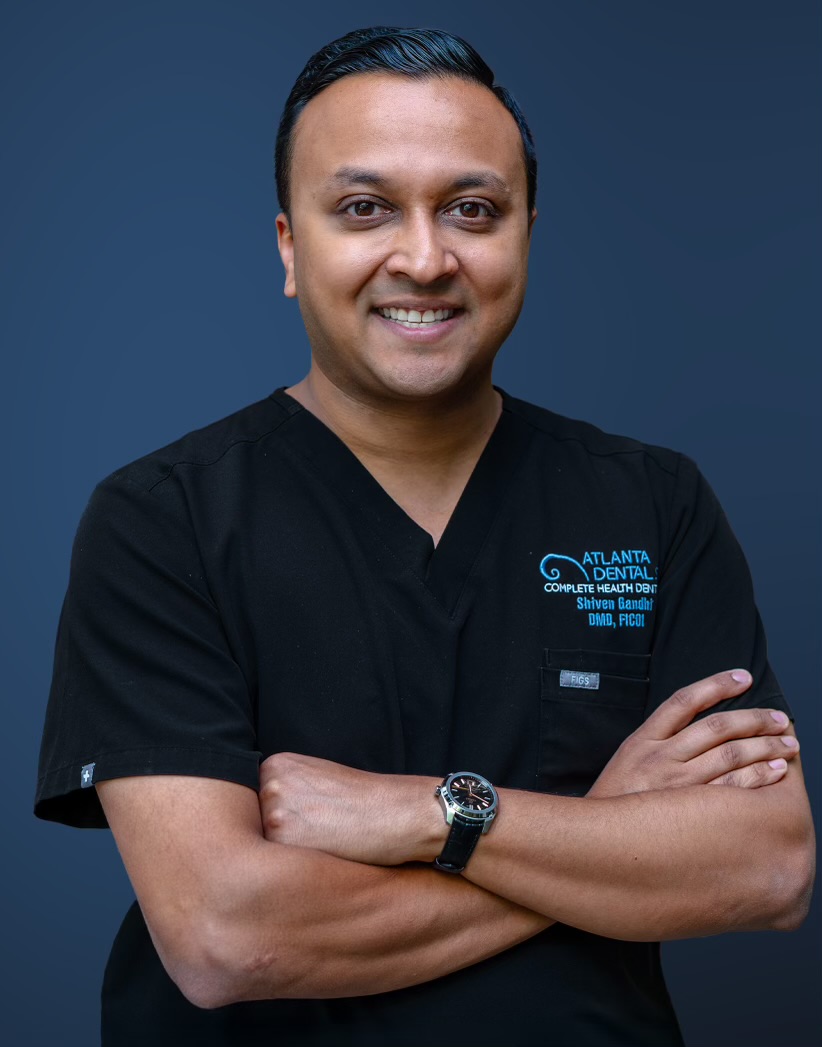
Education and hospital-based training
Dr. Shiven Gandhi earned a bachelor’s degree in biology at the University of Alabama at Birmingham before studying dentistry. He earned his Doctor of Dental Medicine (DMD) from the Dental College of Georgia at Augusta University, graduating in 2013. He then completed a two-year, hospital-based General Practice Residency at the Dental College of Georgia from 2013 to 2015. This training provided a foundation in comprehensive dental care and the treatment of medically complex patients, where dental decisions must be considered alongside a patient’s broader health needs.
His hospital training also included IV moderate sedation. Dr. Gandhi has held a Georgia IV moderate sedation permit since 2015. This background informs his approach to assessing medical history, medications, and individual health factors before discussing sedation. Whether sedation is appropriate, and which approach to use, depends on an individualized assessment rather than a one-size-fits-all recommendation.
Implant fellowship and clinical experience
Dr. Gandhi is a Fellow of the International Congress of Oral Implantologists (FICOI). His practice includes cosmetic and implant dentistry, with attention to both the appearance of a restoration and how it functions. At Atlanta Dental Spa, his experience guides conversations about treatment options, their limitations, and the care needed to maintain dental health over time.
He also serves as a part-time clinical instructor at the Dental College of Georgia, teaching residents implant placement and comprehensive dental treatment. Through continuing education and national lectures, he shares experience in veneers, implant dentistry, digital smile design, esthetic gum surgery, and Botox for facial esthetics and pain.
Responsible esthetics, designed around you
His philosophy is rooted in responsible esthetics: aiming for natural-looking results while considering the health of the teeth and gums and preserving tooth structure where clinically appropriate. Conservative planning means looking beyond a photograph of the teeth. The face, gum line, bite, and the relationship between form and function all help shape a plan that reflects the individual patient rather than a standard idea of a perfect smile.
Digital smile design helps make those conversations more concrete. Patients are involved in discussing shape, proportion, and their preferences, and provisional restorations can serve as a smile “test drive” when appropriate to the treatment. Dr. Gandhi works with a local master ceramist to translate the plan into carefully considered restorations. The goal is a collaborative process, with opportunities to discuss how the proposed smile looks and feels before moving ahead.
Care without judgment
Dental anxiety, an uncomfortable past experience, or time away from dental care can make the first visit feel difficult. Dr. Gandhi’s patient-focused approach emphasizes empathy, listening, and clear explanations without judgment. Patients are encouraged to share concerns and ask questions about options, comfort measures, and the pace of care. An examination and individualized health assessment provide the starting point for a plan that takes their needs and preferences seriously.