Could Invisalign be suitable for me?
The examination, X-rays, photos, and scan help determine suitability. Your bite, gum health, and goals guide the recommendation; the consultation comes before fitting your first trays.
Clear aligners, real function.
This is Dr. Shiven Gandhi’s complete, original 4-page guide, with all photographs, diagrams, and treatment details. For general education only; follow your provider’s individualized instructions. Results vary, and fees and timelines are confirmed during your visit.
Explore clear aligners with Dr. Gandhi: digital planning, the 22-hour wear routine, progress checks and refinements, finishing bonding when needed, retainers, and your treatment investment.
Explore the illustrated guide above, switch to Text View for easier reading on a phone, or download your copy.
Invisalign uses clear, custom, removable trays to move teeth a little at a time. Dr. Gandhi considers more than the appearance of a straight smile: how your teeth meet, how accessible they are for cleaning, and whether alignment can support the finishing work you may need.
A thoughtful plan brings function, cleaning, and esthetics together. Your bite, gum health, and personal goals guide the recommendation. Your examination and records shape the treatment, and your daily wear routine helps keep that plan moving forward.
The consultation includes an examination, X-rays, photographs, and a digital iTero scan. These records help Dr. Gandhi assess your teeth and bite, discuss your goals, and explain the proposed sequence. Review your treatment consent and ask questions before beginning.
Healthy gums are required before treatment starts; complete any recommended cleaning first. The guide describes first trays being ready about three weeks after the scan. That is a typical preparation interval, not the length of the entire treatment, and your team confirms your delivery date.
The guide names six stages: Consultation, Start & Delivery, First Follow-Up, Progress Checks, Refinement if needed, and Retainers. At delivery, the first trays are fitted and any planned attachments placed. Follow-up checks fit and tracking; progress reviews guide the next steps. These stages do not guarantee exactly six physical appointments.
Each tray is typically worn for one to two weeks initially. The interval may shorten to around one week as treatment progresses, only when instructed. Wear aligners 22 hours a day, use chewies as directed to seat them, and follow your assigned sequence rather than advancing trays yourself.
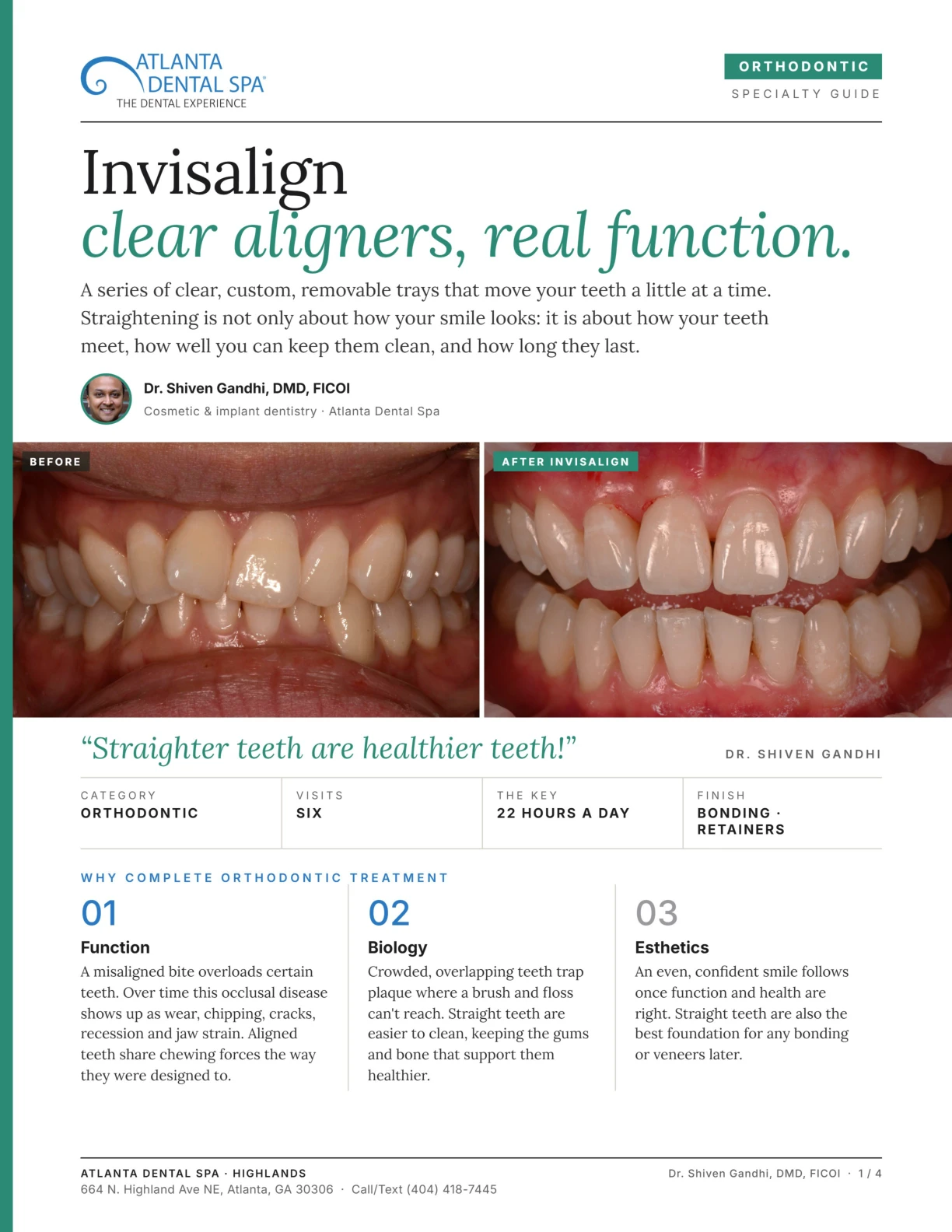
In the guide’s actual patient case, crowded, overlapping front teeth were aligned, revealing small spaces. After attachments were removed, conservative, tooth-colored bonding closed those spaces, and retainers supported the finished smile. This illustrates one patient’s sequence, not a result every patient should expect.
Some gaps may need bonding after alignment, but a gap should be assessed rather than assumed normal. Dr. Gandhi evaluates whether finishing work is appropriate. If additional tooth movement is needed, a new scan and refinement trays may be recommended; refinement is a treatment adjustment, not automatically a failure.
Remove trays for eating and brushing, then put them back in. Drink only water while wearing them. Store trays in their case, never wrapped in a napkin, and use your chewies according to the instructions you receive. Bring questions about fit or your routine to the team.
Retainers are an ongoing part of care after alignment and any recommended finishing work. Wear them as directed; your personal instructions determine the schedule. For a lost or broken aligner, severe pain, or a sharp attachment, call/text (404) 418-7445 promptly instead of modifying the tray or attachment yourself.
The examination, X-rays, photos, and scan help determine suitability. Your bite, gum health, and goals guide the recommendation; the consultation comes before fitting your first trays.
Wear trays 22 hours daily. Changes typically start at one to two weeks per tray and may move to around one week when instructed, not on your own schedule.
Take them out to eat and brush. Only water should be consumed while trays are in; return them afterward to maintain your prescribed wear time.
They are small, tooth-colored bonded grips that help trays engage the teeth for planned movement. They are placed when needed and removed at the finishing stage.
Not necessarily. Refinement uses a new scan and additional trays when further movement is needed. Your progress assessment determines whether this stage belongs in your plan.
Dr. Gandhi confirms your timeline after assessing your bite and planned tooth movement. First trays are typically ready around three weeks after the scan, but completing alignment and any refinements takes longer and follows your individual plan.
Bonding depends on the assessed finishing needs, not simply the presence of a space. Retainers follow treatment and are worn as directed. Ask whether any recommended bonding is included in your quote.
The guide lists $6,535: $5,836 for aligners plus $699 for final retainers. Your written quote controls. It lists a nonrefundable $1,500 scan-date deposit and a 2% pay-in-full saving. CareCredit, LendingClub, and Sunbit financing are subject to approval. Insurance benefits are estimates, not guarantees; confirm coverage and payment terms with the team.
Meet with Dr. Gandhi to review your goals, discuss your options, and confirm a treatment plan.
Educational information from Dr. Gandhi’s Invisalign guide, not a substitute for your examination, written treatment plan, or personal instructions. Timing, suitability, fees, and results are individualized; your provider’s directions take precedence. This overview is adapted from Dr. Gandhi’s specialty guide above. It is general education, not a diagnosis or personalized medical advice. Individual results vary; follow your provider’s written instructions.
Complete original guide. Use + to enlarge, then swipe or scroll sideways. Choose Text View for easier reading.