Resin Bonding & Resin Veneers

Sculpted to recreate nature.

Opening the online reader…

This is Dr. Shiven Gandhi’s complete, original 5-page guide, with all photographs, diagrams, and treatment details. For general education only; follow your provider’s individualized instructions. Results vary, and fees and timelines are confirmed during your visit.

Read at your own pace.

Explore targeted bonding and full resin veneers: preserving natural teeth, layered composite materials, hand-sculpted shape and shade, real patient examples, maintenance, and tooth-by-tooth pricing.

Explore the illustrated guide above, switch to Text View for easier reading on a phone, or download your copy.

Resin bonding and resin veneers in Atlanta

A chipped edge, a small space, or one tooth that never quite matched can draw your attention when you smile. Composite resin lets Dr. Gandhi refine these details with tooth-colored material, shaped by hand to complement your existing teeth.

The right amount of treatment matters. Localized resin bonding adds material only where a tooth needs repair or reshaping. A resin veneer recreates the entire visible front, or facial, surface for a broader change in color and shape. Your plan may combine both, tooth by tooth.

Preserve your enamel, refine your smile

Dr. Gandhi aims to preserve healthy enamel wherever possible. Small bonding repairs often need little or no drilling, while resin veneers may require gentle preparation. The amount depends on the tooth and intended change; minimally invasive treatment does not mean every case is no-prep or reversible.

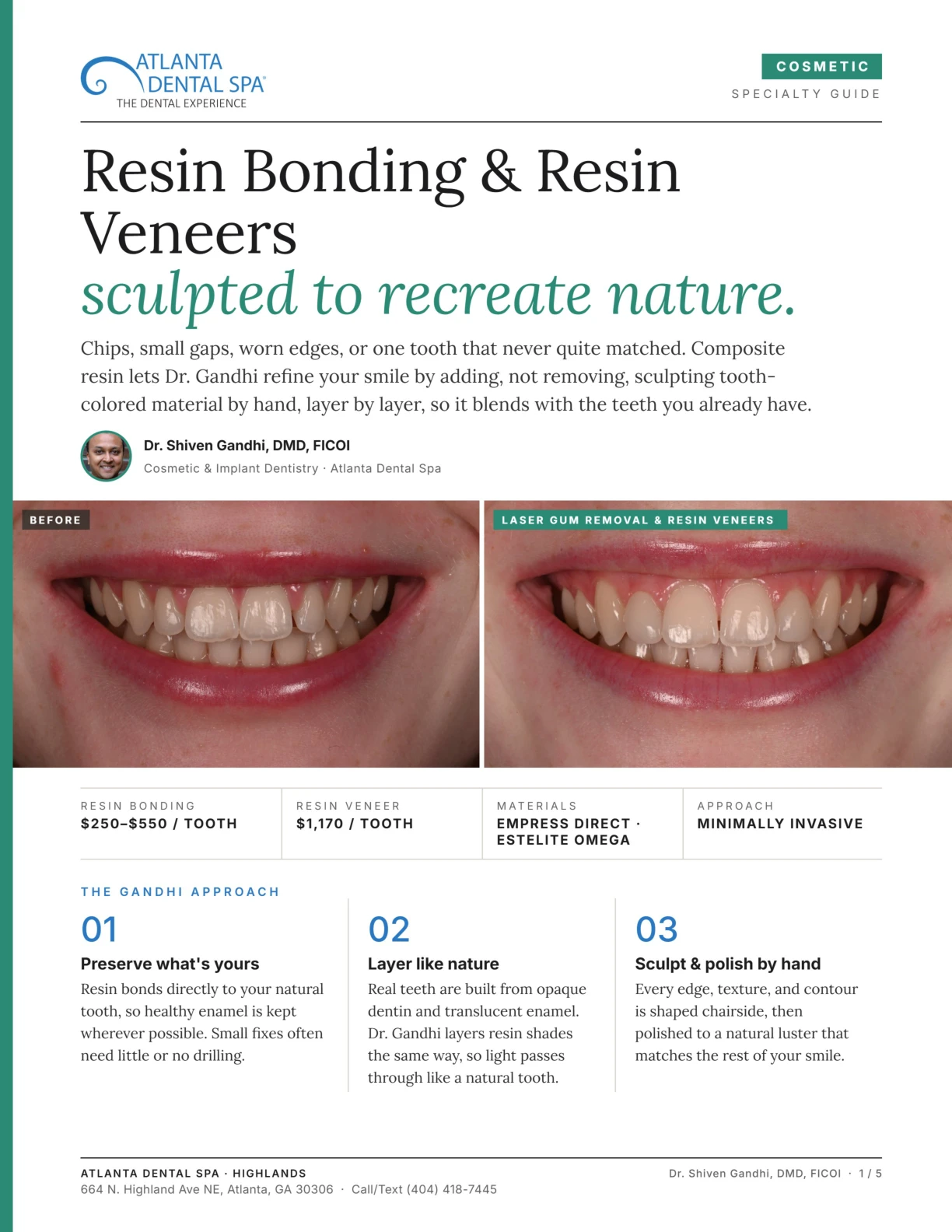
Resin can refine chipped or uneven edges, minor gaps, tooth shape, and finishing details after Invisalign. A fuller resin veneer may address discoloration that whitening cannot correct or replace stained old bonding. Actual patient examples include rebuilding fractured edges and enlarging small, peg-shaped lateral incisors. Individual results vary.

A plan shaped around you

Your consultation includes a close look at your teeth, gums, and bite. Smile photos and shade mapping help Dr. Gandhi understand your natural colors and proportions. You can explain what bothers you and how you would like your smile to look, without committing to a uniform set of teeth.

These details become a written, tooth-by-tooth plan identifying bonding, resin veneers, or a combination, with fees confirmed before treatment. If excess or uneven gum tissue affects your smile's frame, laser gingivectomy may be recommended first. It is needed only in selected cases, carries an additional fee, and is not the same as deeper crown lengthening involving bone.

Layered color, hand-finished detail

Treatment follows shade mapping, gentle tooth preparation where needed, placement and curing of thin resin layers, then sculpting and polishing. Dentin shades create warmth and body beneath enamel shades that bring brightness and translucency. The goal is depth and a natural response to light, rather than one flat shade.

Dr. Gandhi chooses materials case by case, including Empress Direct by Ivoclar and Estelite Omega by Tokuyama. Edges, texture, contours, and the bite are refined chairside, then polished to blend with neighboring teeth. Your team confirms the treatment sequence for your individual plan.

Protect your smile's details

If you clench or grind, wear your prescribed night guard. Avoid biting ice, pens, or nails, and never use your teeth to open packages. These habits stress the carefully shaped edges. Follow your personal care instructions and keep regular cleaning appointments, when the team can assess and re-polish the resin.

Limit staining from coffee, tea, and red wine, and rinse afterward. Resin typically lasts 5–10 years and may be repaired or refreshed in the office. Porcelain often lasts 10–15 years or more and is typically replaced when renewal is needed. Neither range is a guarantee; habits, protection, and individual circumstances matter.
Your questions, answered.

Could resin treatment be right for me?

It may suit chips, uneven edges, minor spaces, small lateral incisors, or old discolored bonding. Your teeth, gum health, bite, and goals determine whether localized bonding, a resin veneer, or another approach is appropriate.

How is bonding different from a resin veneer?

Both use composite resin. Bonding is a targeted addition to part of a tooth; a resin veneer recreates its whole visible facial surface. Different teeth can need different approaches within the same smile.

Will my teeth need preparation?

Small fixes often need little or no drilling, but resin veneers may need minimal preparation. Dr. Gandhi explains your specific needs before treatment; enamel preservation does not make every treatment reversible.

Which resin materials does Dr. Gandhi use?

Empress Direct from Ivoclar and Estelite Omega from Tokuyama are two choices. Selection is individualized, with dentin and enamel shades layered to recreate natural color, depth, and translucency.

How does resin compare with porcelain veneers?

Resin is sculpted chairside and can often be repaired in the office. Porcelain is crafted by a ceramist, typically lasts longer, and is usually replaced rather than refreshed. Porcelain veneers cost $2,500 per tooth.

How long can bonding or resin veneers last?

The typical range is 5–10 years, compared with 10–15 years or more for porcelain. These are expectations, not guarantees. Resin may need repairs, polishing, or refreshing during that time.

How should I care for my resin?

Wear your prescribed night guard, avoid hard-object biting and opening packages with your teeth, limit staining drinks and rinse afterward, and attend regular cleanings and polishing. Follow your personal instructions.

What does treatment cost?

Localized resin bonding is $250–$550 per tooth, depending on the area, surfaces, and layering needed. A resin veneer is $1,170 per tooth. Laser gingivectomy is an additional fee only when needed, not included. Your written plan confirms the total.

A plan made for you.

Meet with Dr. Gandhi to review your goals, discuss your options, and confirm a treatment plan.

Educational information from Dr. Gandhi’s resin bonding and resin veneers guide. Your examination, written plan, and personal care instructions take precedence. Suitability and results vary. This overview is adapted from Dr. Gandhi’s specialty guide above. It is general education, not a diagnosis or personalized medical advice. Individual results vary; follow your provider’s written instructions.